The Hidden Costs of Manual Permit Processing in Canadian Municipalities
Canadian municipalities are facing unprecedented pressure to accelerate housing development and infrastructure projects. While many local governments have updated their official plans, the administrative processes used to approve permits often remain rooted in legacy systems. Relying on paper forms, static PDFs, and email chains creates a significant operational burden that often goes unmeasured.
Why the Manual Approach Fails
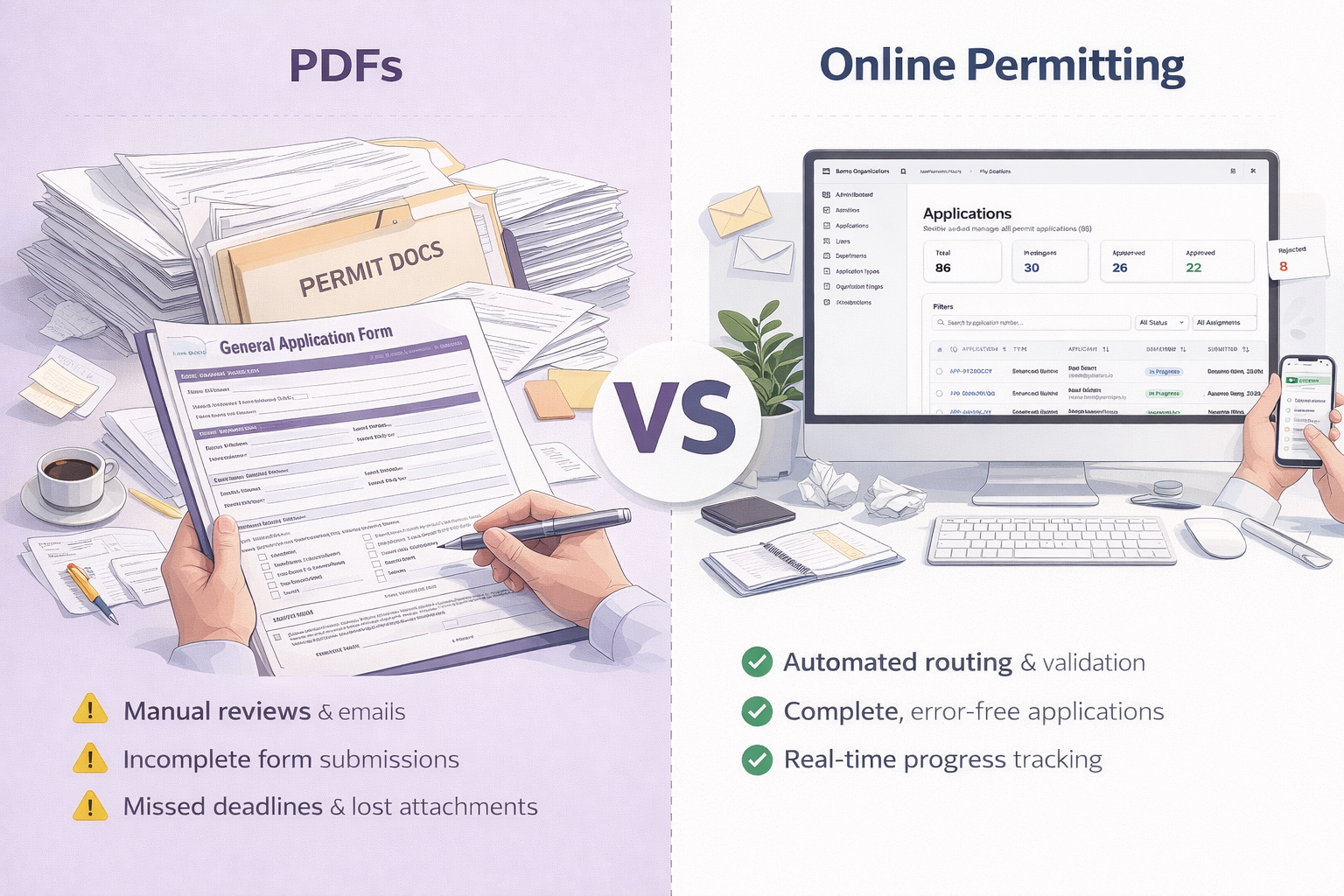
Many planning and building departments still rely on fragmented workflows. A typical application might arrive via email, be printed for physical review, and then tracked in a spreadsheet that only one staff member can access at a time. This approach fails because it lacks a single source of truth.
When information is siloed in individual inboxes or physical folders, the risk of data loss or version control errors increases. Communication between departments like engineering, fire, and planning becomes slow and disjointed, leading to unnecessary delays in the approval cycle.
Operational Consequences
The impact of manual processing extends beyond slow timelines. It affects every level of municipal operations:
- Staff Productivity: Building officials and planners spend a disproportionate amount of time on administrative tasks, such as answering status inquiries or manually entering data, rather than focusing on technical reviews and site inspections.
- Financial Loss: Inefficient processes lead to higher overhead costs. The time spent managing paper trails represents a significant portion of the municipal budget that could be reallocated to higher value projects.
- Reduced Visibility: Without a centralized digital system, CAOs and department heads lack the data needed to identify bottlenecks. It becomes difficult to report accurately to Council on permit volumes or average processing times.
- Compliance Risks: Keeping track of changing provincial regulations and building codes is difficult when using static documents. This increases the risk of oversight and potential legal liabilities.
What Modern Permitting Software Changes
Transitioning to a digital permitting system replaces manual hand-offs with automated workflows. Instead of documents sitting on a desk, the system routes applications to the correct department automatically.
Modern software provides real-time visibility for both staff and applicants. When a developer can check their permit status online, the volume of phone calls and emails to the municipal office drops significantly. This transparency builds trust with the community and allows staff to focus on their core responsibilities.
Why This Matters in Canada
The Canadian municipal landscape is unique. With new provincial mandates regarding housing targets and development charges, municipalities must be more agile. Legacy systems are often too rigid to adapt to these legislative shifts. A modern, cloud-based solution allows smaller and mid-sized municipalities to remain compliant without requiring a massive internal IT infrastructure.
Where PermiPro Fits In
PermiPro provides a purpose-built platform designed specifically for the needs of Canadian municipalities. The software centralizes the entire permit lifecycle, from initial application to final inspection. By digitizing workflows, PermiPro helps departments reduce processing times, eliminate paper waste, and provide staff with the tools they need to work efficiently.
The platform is focused on usability, ensuring that both municipal employees and residents can navigate the system with minimal training. It addresses the practical challenges of municipal governance by providing clear data insights and reliable compliance tracking.
Book a Demo
If your municipality is looking to modernize its permitting process and reduce administrative overhead, our team is ready to help.
To learn more about how PermiPro can support your operations, visit our website to schedule a demonstration: https://www.permipro.io/en