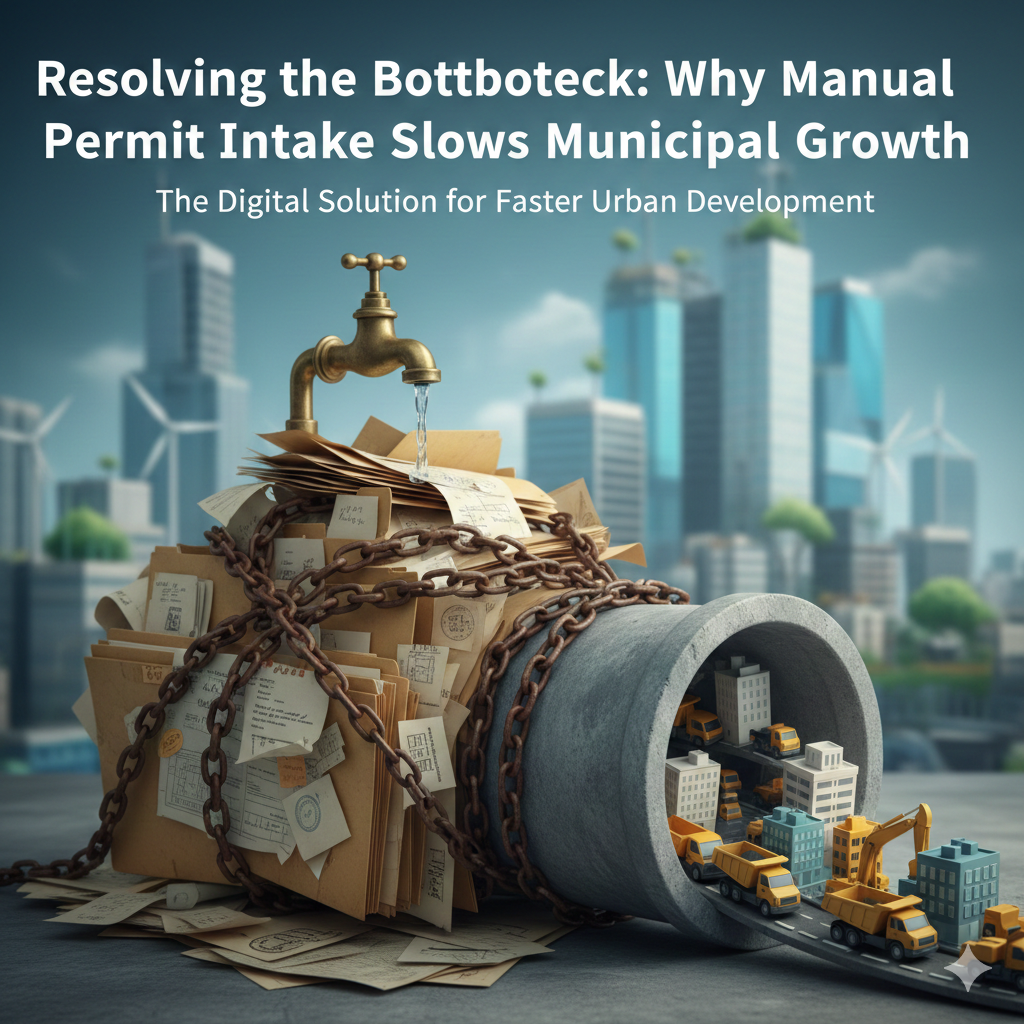
Why Manual Permit Intake Is the Primary Bottleneck for Many Canadian Municipalities
The permit application is the first point of contact between a developer or resident and the municipal planning department. In many Canadian jurisdictions, this initial step remains the most significant hurdle in the entire development lifecycle. When the intake process relies on physical paper or unmanaged email attachments, the project faces delays before a building official even begins a technical review.
Why the Current Approach Fails
Many municipalities still operate on an intake model designed for a different era. This usually involves applicants downloading a PDF, filling it out by hand or digitally, and then emailing it to a general inbox or bringing a physical copy to a service counter.
This approach fails because it lacks validation. A staff member must manually open every document to check for missing signatures, incomplete fields, or missing site plans. If a single document is missing, the application is stalled, requiring back and forth communication that can take days or weeks.
Operational Consequences
The reliance on manual intake creates a ripple effect across the entire department.
- Administrative Burden: Staff spend a disproportionate amount of their time on data entry and filing rather than high-value technical reviews.
- Transcription Errors: Manually moving data from a paper form into a legacy database or spreadsheet introduces errors that can impact compliance and reporting.
- Lack of Visibility: When an application is sitting in an inbox or on a desk, the applicant has no way to track its status. This leads to an increase in phone calls and emails to staff, further slowing down the process.
- Compliance Risks: Without a standardized digital trail, ensuring that every permit follows the exact same regulatory path becomes difficult, increasing the risk of oversight.
What Modern Permitting Software Changes
Modernizing the intake process is not just about moving from paper to PDF. It is about implementing a structured digital environment.
A modern system uses intelligent forms that prevent a user from submitting an application until all required fields are filled and all necessary documents are uploaded. This ensures that when a file reaches a staff member, it is "deemed complete" by default. Digital systems also allow for integrated payments, meaning the permit fee is collected at the moment of submission rather than being a separate administrative task.
Why This Matters Specifically in Canada
Canadian municipalities are currently facing unprecedented pressure to increase housing supply and update aging infrastructure. Provinces are increasingly implementing stricter timelines for permit approvals.
In this environment, a manual intake process is a liability. For small to mid-sized municipalities, the ability to process more permits with existing staff is the only way to meet these growing demands without significantly increasing the municipal budget.
Where PermiPro Fits In
PermiPro is designed to eliminate the friction associated with permit intake. By providing a centralized portal for applicants, PermiPro ensures that all data is captured accurately from the start.
The platform automates the initial verification steps, allowing municipal staff to focus on the technical merits of an application. It provides a clear, auditable trail for every permit, ensuring that timelines are met and that all departments are working from a single version of the truth.
Book a Demo
Interested in seeing how PermiPro can streamline your municipality's intake process?