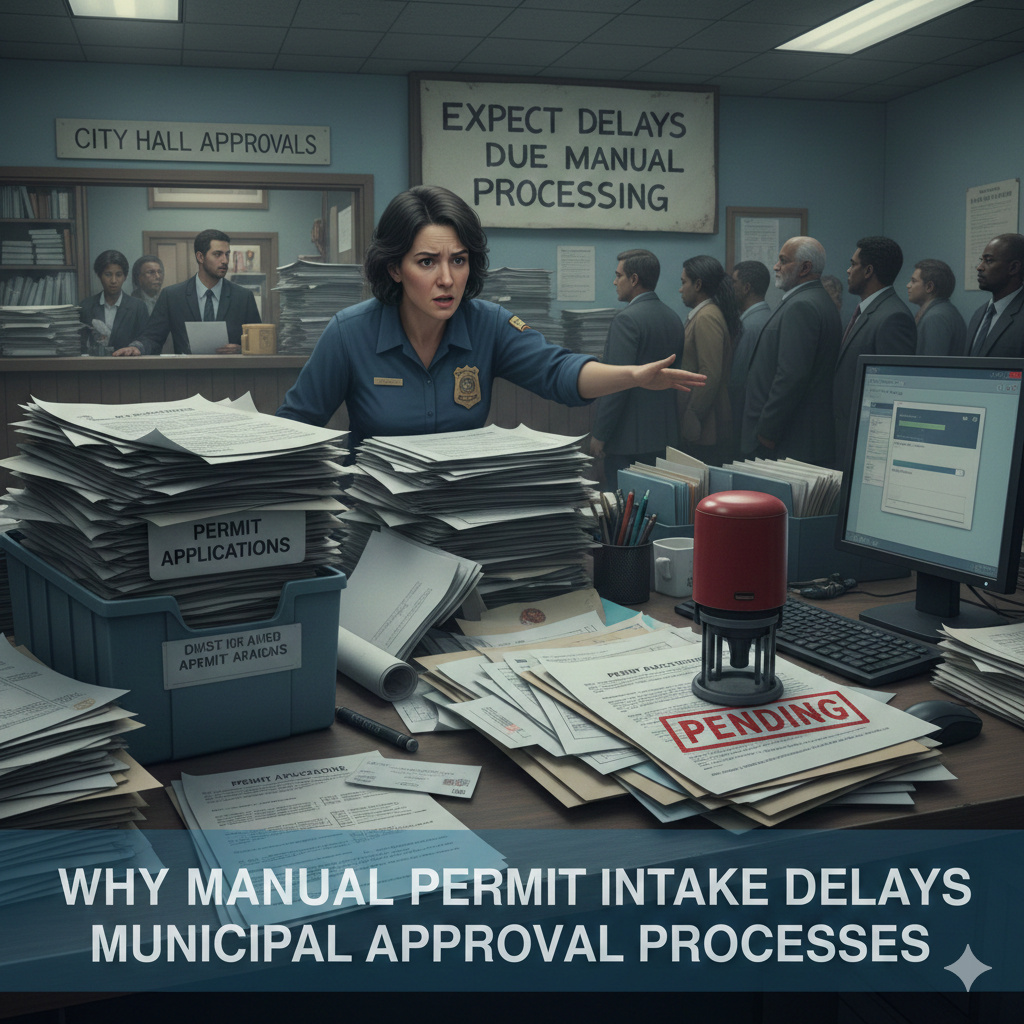
Why Manual Permit Intake Delays Municipal Approval Processes
When municipal leaders look to improve permit processing times, they often focus on the technical review stage. However, for many Canadian municipalities, the most significant delays happen before a building official even looks at a set of plans. The period between an applicant submitting a form and that application being marked as complete is a major source of operational friction.
Manual permit intake relies on paper forms, static PDFs, and long email chains. This approach creates a "pre-process" bottleneck that drains staff resources and frustrates residents.
Why the Current Manual Approach Fails
The traditional method of receiving applications assumes that every applicant knows exactly what is required for their specific project. In reality, this is rarely the case. When a municipality accepts applications through a physical counter or a generic email inbox, the quality of the data is inconsistent.
Staff often receive incomplete packages, missing site plans, or forms with illegible handwriting. Because there is no logic built into a paper form to require specific attachments based on the project type, the burden falls on administrative staff to sort through the submission and identify what is missing.
Operational Consequences of Manual Saisie
Administrative Drag and Staff Burnout
Administrative staff spend a disproportionate amount of their day acting as messengers. They must manually transcribe data from paper forms into internal spreadsheets or legacy databases. This double-handling of data increases the probability of human error and diverts staff from higher-value tasks.
The Back-and-Forth Loop
A manual intake process often leads to a cycle of clarification. An officer reviews a file, realizes a document is missing, emails the applicant, and waits. This can happen several times for a single application, adding weeks to the timeline before the official review clock even starts.
Lack of Visibility and Accountability
When files are sitting on a desk or buried in an inbox, it is nearly impossible for a Planning Director or CAO to get an accurate view of the department's workload. Without digital tracking from the moment of submission, there is no way to measure how long applications spend in the "incomplete" stage versus the "review" stage.
How Modern Permitting Software Changes the Workflow
Modern digital solutions move the validation process to the front end. By using smart web forms, the software ensures that an application cannot be submitted until all required fields are filled and all necessary documents are uploaded.
This shift changes the role of the intake clerk from a data entry specialist to a quality assurance professional. Instead of chasing missing signatures, they spend their time moving valid files forward. Modern systems provide immediate confirmation to the applicant, reducing the volume of status-check phone calls to the municipal office.
Why This Matters Specifically in Canada
Canadian municipalities are facing unprecedented pressure to accelerate housing starts and infrastructure projects. With provincial mandates pushing for faster approval timelines, the administrative delay caused by manual intake is no longer just an inconvenience; it is a compliance risk.
Furthermore, as many experienced building officials approach retirement, municipalities must find ways to do more with fewer personnel. Automating the intake phase ensures that the valuable time of technical staff is spent on inspections and code compliance rather than administrative follow-up.
Where PermiPro Fits In
PermiPro provides a structured environment designed specifically for the Canadian municipal context. Our platform replaces fragmented manual workflows with a centralized digital intake portal. By enforcing data integrity at the point of submission, PermiPro ensures that only complete, actionable applications reach your department.
The platform provides clear dashboards for staff to manage workloads and offers applicants a transparent view of their project status. This reduces the administrative burden on municipal teams while improving the service experience for the community.
Book a Demo
Discover how your municipality can eliminate intake delays and modernize the building permit process.