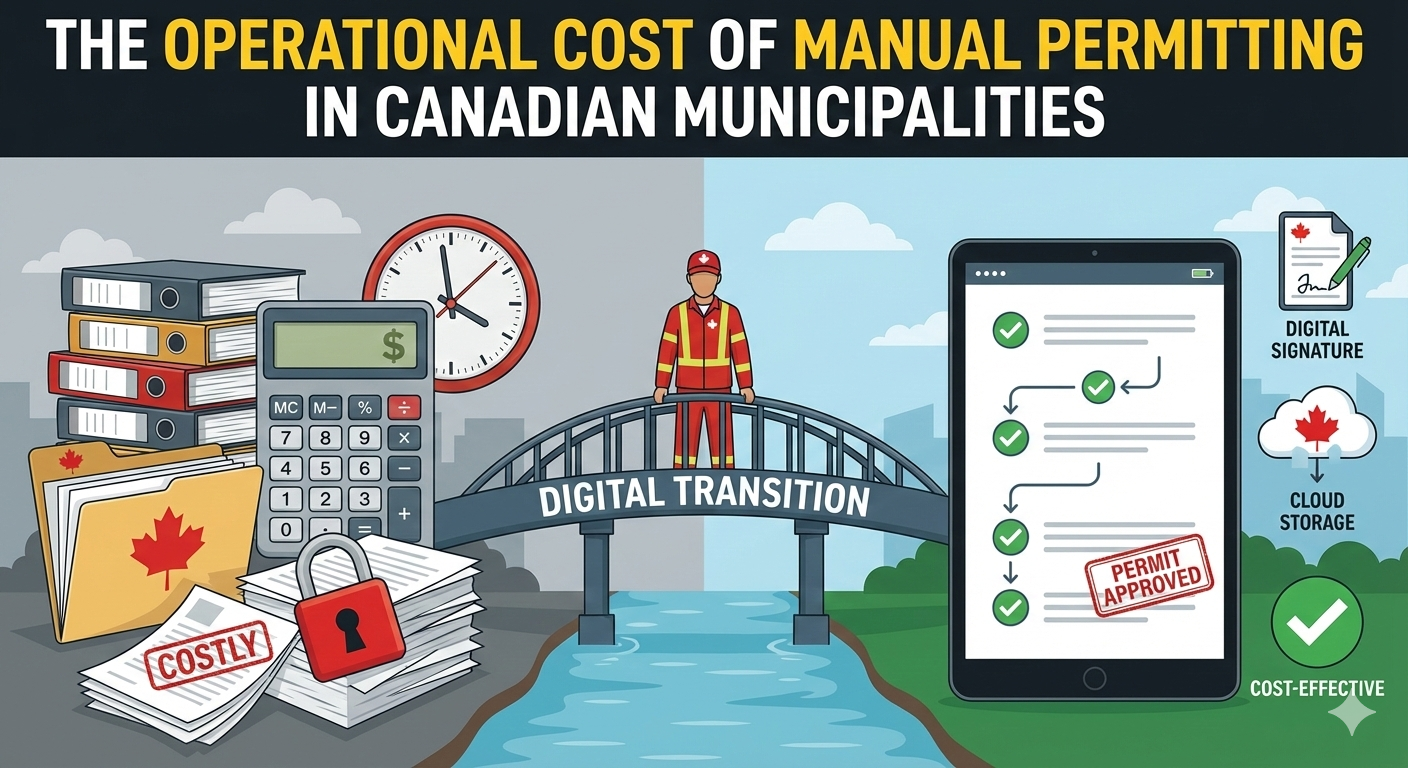
The Operational Cost of Manual Permitting in Canadian Municipalities
For many small to mid-sized Canadian municipalities, the building permit process remains a fragmented journey of paper forms, PDF attachments in overflowing inboxes, and manual spreadsheet tracking. While this approach may have felt manageable in the past, the current demand for housing and infrastructure has pushed these legacy systems to a breaking point.
The challenge is not just the volume of applications: it is the lack of visibility. When a process relies on physical files or disconnected emails, tracking the progress of a single permit becomes a time-consuming task for both staff and applicants.
Why the Manual Approach Fails
Manual systems are inherently reactive. Information lives in silos, often trapped on a single desk or within an individual email account. This lack of centralization creates several points of failure:
- Inconsistent Data Entry: Manual transcription from paper to digital records often leads to errors in addresses, fees, or applicant details.
- Version Control Issues: Without a single source of truth, staff may inadvertently review outdated site plans or miss revised documents sent via separate emails.
- Communication Gaps: Applicants frequently call the municipal office for updates because they have no way to track their status independently. This creates an endless cycle of status-check inquiries that distract staff from technical reviews.
Operational Consequences
The impact of these inefficiencies extends beyond simple delays. For the municipality, the consequences include:
- Staff Burnout: Planning and building departments are often understaffed. Spending hours on administrative data entry rather than technical inspections or plan reviews leads to high turnover and decreased job satisfaction.
- Revenue Lag: Slow processing times delay the start of construction, which in turn delays the collection of property tax revenue and development charges.
- Audit and Compliance Risks: In a manual system, maintaining a clean audit trail is difficult. Proving that all legislative requirements were met during the approval process becomes a monumental task during an audit or legal dispute.
What Modern Permitting Software Changes
Transitioning to a digital workflow changes the fundamental nature of municipal operations. Instead of chasing files, staff manage a structured pipeline. Modern systems provide:
- Centralized Intake: A single portal for all applications, ensuring that no file is lost and all required documents are submitted before the review begins.
- Automated Routing: Permits move automatically to the next reviewer (e.g., from planning to engineering to building) based on pre-defined logic.
- Real-Time Transparency: Both staff and applicants can see exactly where a permit sits in the approval chain.
Why This Matters Specifically in Canada
Canadian municipalities face unique pressures. With provincial mandates to speed up housing delivery and the increasing complexity of building codes, the margin for error is shrinking. Furthermore, as many municipal employees move toward hybrid work models, having a cloud-based system ensures that the permitting process can continue seamlessly, regardless of where the team is located.
Where PermiPro Fits In
PermiPro provides a purpose-built platform designed to handle the complexities of Canadian municipal workflows. By consolidating intake, review, payments, and inspections into one secure environment, PermiPro eliminates the administrative friction that slows down local development. The focus is on providing a clear, reliable system that allows municipal experts to focus on their professional responsibilities rather than managing paperwork.
Book a Demo
If your municipality is looking to reduce backlogs and improve service delivery, see how PermiPro can transform your planning and building department.