Modernizing Municipal Permitting: Moving Beyond Legacy Systems
Canadian municipalities face increasing pressure to handle development and building permits with greater speed and precision. As local populations grow, the reliance on paper based processes or fragmented legacy software becomes a significant hurdle. For Chief Administrative Officers and Directors of Planning, the challenge is not just about technology: it is about maintaining service levels and ensuring regulatory compliance in an increasingly complex environment.
Why the current approach fails
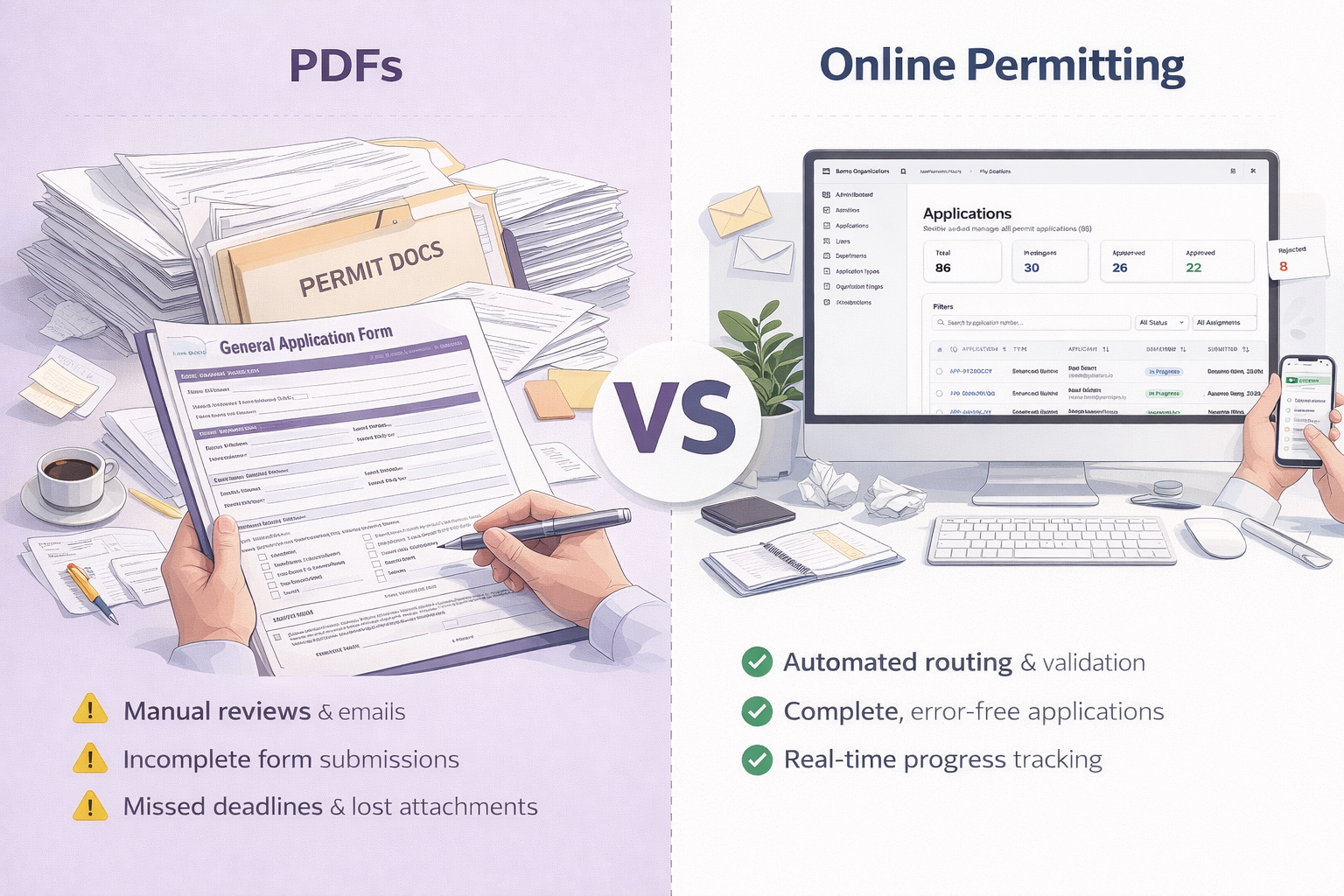
Many municipalities still rely on a combination of physical paper forms, email chains, and localized spreadsheets. This fragmented approach creates several operational friction points. Information is often siloed within specific departments, making it difficult for team members to get a holistic view of a project status.
When data is trapped on paper or in disconnected systems, the risk of human error increases. Manual data entry is time consuming and prone to mistakes, which can lead to delays in permit issuance or errors in compliance documentation.
Operational consequences
The impact of inefficient permitting systems extends beyond simple administrative delays. For municipal staff, the result is often burnout and frustration. Spending hours searching for physical files or cross referencing emails prevents skilled planners and inspectors from focusing on high value tasks.
For the municipality as a whole, legacy systems lead to a lack of visibility. Without a centralized digital record, it is difficult for leadership to track performance metrics, identify bottlenecks, or provide accurate updates to residents and developers. This lack of transparency can damage the relationship between the municipality and the community it serves.
Impact on timelines and compliance
In the context of Canadian building codes and local zoning bylaws, precision is mandatory. Legacy systems make it difficult to ensure that every permit undergoes the exact same rigorous review process. When workflows are not standardized within a digital system, there is a higher risk of missing a required step or failing to document a critical inspection. These gaps create legal and financial risks for the municipality.
What modern municipal permitting software changes
Transitioning to a dedicated digital permitting platform transforms the permit lifecycle from a series of manual tasks into a structured, automated workflow. Modern software provides a single source of truth where all stakeholders: applicants, planners, and inspectors: can interact with the same data in real time.
Key improvements include:
- Automated routing of applications to the correct departments.
- Real time status updates for applicants, reducing the volume of inquiry calls.
- Digital plan review tools that allow for faster feedback and revisions.
- Centralized storage of all documents and inspection reports for easy auditing.
Why this matters specifically in Canada
Canadian municipalities operate under specific provincial frameworks and local expectations for transparency. Whether managing the requirements of the Ontario Building Code or local zoning in British Columbia, the ability to adapt software to specific regional rules is essential. A digital approach ensures that provincial reporting requirements are met with minimal manual effort, allowing staff to focus on community growth rather than paperwork.
Where PermiPro Fits In
PermiPro is designed to address these specific municipal challenges by providing a streamlined, intuitive interface for both staff and residents. The platform focuses on the operational realities of Canadian planning and building departments. By automating routine tasks and centralizing communication, PermiPro helps municipalities reduce processing times and improve the accuracy of their records without adding unnecessary complexity to the daily routine of staff members.
Book a Demo
To see how modern software can improve your municipal permitting workflows, visit our website to learn more or schedule a demonstration.