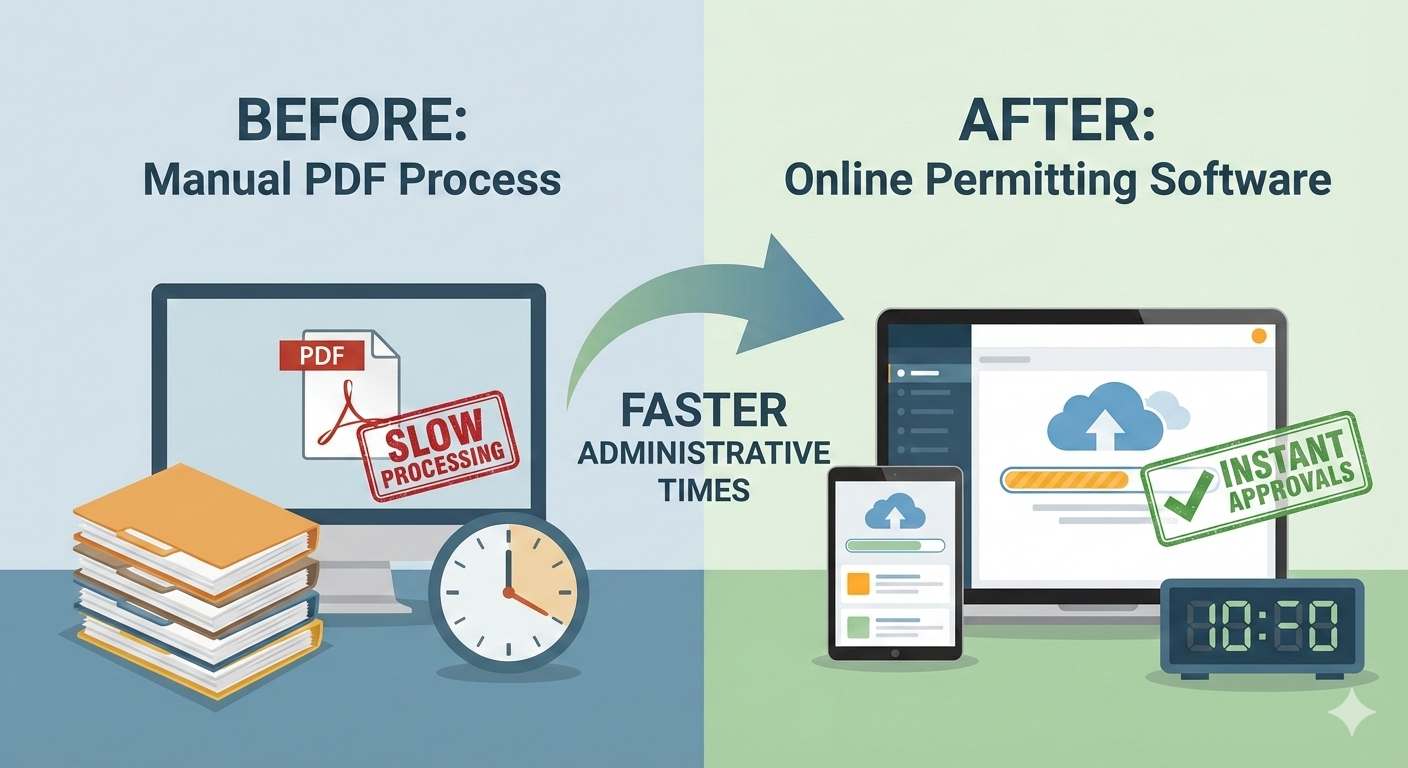
Why Transitioning From PDF to Online Permitting Software Reduces Administrative Processing Times
Many Canadian municipalities have adopted what they call a digital approach by allowing residents to download, fill out, and email PDF application forms. While this is a step up from physical paper, it often creates a secondary set of administrative bottlenecks. The PDF is a static document that requires manual intervention at every stage of the approval chain.
As municipalities face increasing pressure to accelerate housing starts and infrastructure projects, the limitations of PDF-based workflows are becoming a significant operational risk.
Why the Current PDF Approach Fails
The primary issue with PDF forms is that they are "unstructured data." When a planning department receives a PDF via email, the work has only just begun. Staff must manually extract information from the document and re-key it into internal spreadsheets, legacy databases, or financial systems.
This manual data entry is not only slow, but it also introduces high rates of human error. A single typo in a property roll number or an applicant email address can result in days of delays as staff work to reconcile conflicting information.
Operational Consequences
Relying on PDFs creates a fragmented workflow. Because the data is trapped inside a document, it cannot easily be tracked or analyzed.
- Lack of Transparency: Applicants have no way to check their status without calling or emailing the municipal office. This creates a high volume of low-value administrative inquiries.
- Version Control Issues: It is common for applicants to submit an outdated version of a form or for multiple versions of a document to exist across different staff inboxes.
- Manual Routing: Documents must be manually forwarded to different departments for review, such as fire, engineering, or zoning. There is no automated way to ensure these reviews happen concurrently.
Impact on Staff and Timelines
The administrative burden of managing PDF "paperwork" often consumes up to 40 percent of a building official or planner’s day. Instead of focusing on technical reviews and site inspections, highly skilled staff are acting as data entry clerks.
When a PDF application is incomplete, the "ping-pong" effect begins. Staff must notify the applicant, wait for a revised document, and then restart the manual entry process. This adds weeks to the total processing time, directly impacting the municipality's ability to meet provincial housing targets.
What Modern Permitting Software Changes
Transitioning to a dedicated online permitting platform replaces static documents with dynamic data. Rather than filling out a form, applicants enter information directly into a secure portal.
- Real-Time Validation: The system prevents the submission of incomplete applications. If a required field is missing or a file is not uploaded, the applicant is notified immediately.
- Automated Data Integration: Data flows directly from the applicant into the municipal database. There is no manual re-keying required.
- Concurrent Reviews: Multiple departments can review the same application simultaneously, significantly shortening the approval window.
- Automated Status Updates: Applicants receive automated notifications at every milestone, reducing the number of phone calls to the front desk.
Why This Matters Specifically in Canada
Canadian municipalities are under unprecedented pressure. From Bill 109 in Ontario to similar legislative pushes in British Columbia and the Atlantic provinces, the mandate is clear: speed up the permit process.
Legacy PDF workflows are no longer sufficient to meet these legal and social expectations. To support local growth and maintain fiscal responsibility, municipalities must move toward systems that prioritize data integrity and workflow automation.
Where PermiPro Fits In
PermiPro provides a purpose-built platform designed specifically for the Canadian municipal context. By replacing PDFs with a centralized, cloud-based interface, PermiPro allows municipalities to automate the repetitive tasks that currently slow down planning and building departments.
The platform is designed for rapid deployment, ensuring that municipalities can transition away from cumbersome PDF workflows without the need for extensive IT overhauls. The result is a more resilient, transparent, and efficient permitting process.
Book a Demo
Discover how PermiPro can help your municipality eliminate administrative bottlenecks and improve service delivery for your residents.