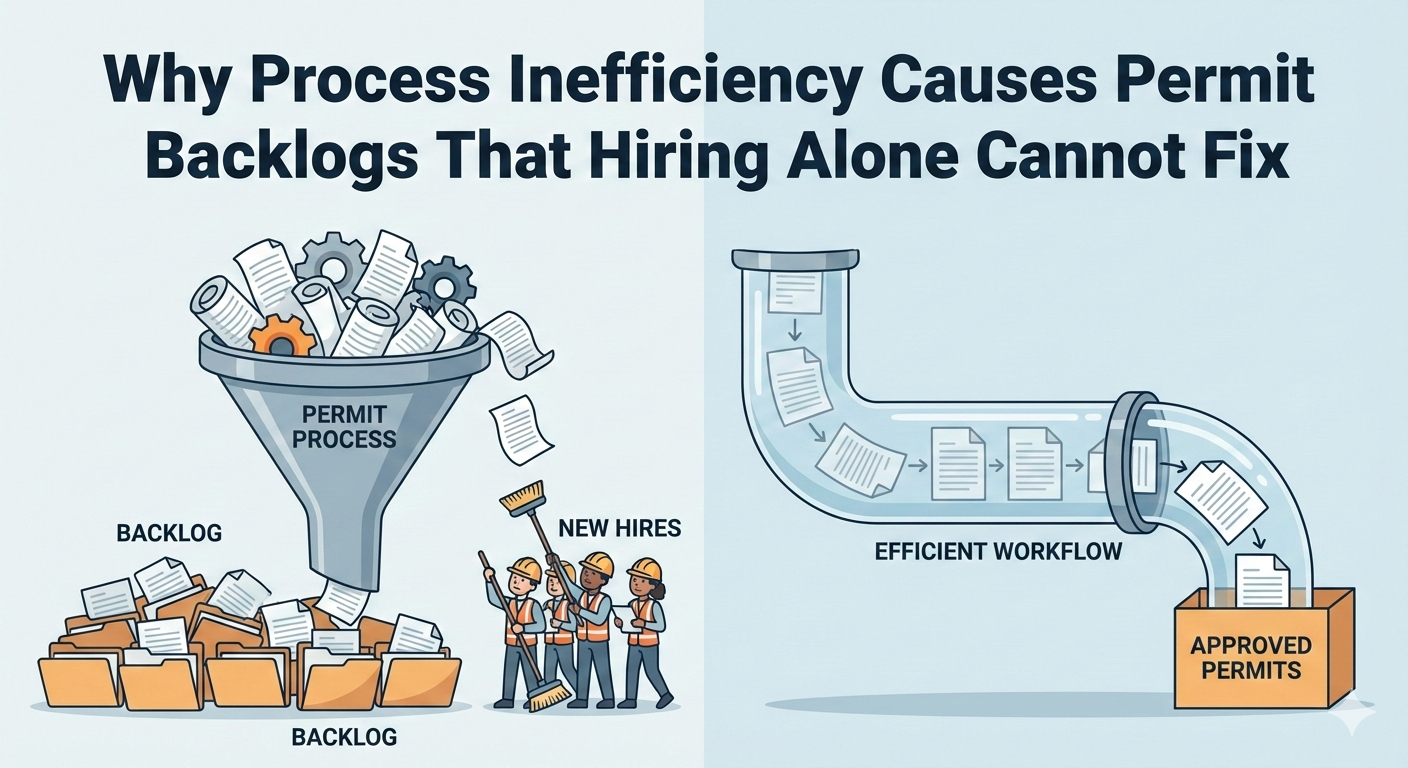
Why Process Inefficiency Causes Permit Backlogs That Hiring Alone Cannot Fix
Municipalities across Canada are facing unprecedented pressure to accelerate development. When permit backlogs grow, the most common response from leadership is to increase headcount. While adding planning and building staff is necessary in some cases, it often fails to solve the underlying problem. If the core process is inefficient, new hires simply become part of the bottleneck.
The Limitation of the Hiring Strategy
Many municipal departments rely on legacy systems: a combination of paper files, spreadsheets, and disconnected email chains. When a new staff member joins, they are expected to navigate these informal structures.
Without a standardized digital workflow, the "onboarding" process actually becomes a transfer of institutional knowledge that lives only in the minds of senior staff. This creates a cycle where existing employees spend their time training new hires instead of processing permits, temporarily making the backlog even worse.
Operational Consequences of Manual Workflows
When a process relies on manual intervention rather than system-driven logic, several operational risks emerge:
- Information Silos: Permit data trapped in individual email inboxes makes it impossible for team members to collaborate or pick up a file where another left off.
- Invisible Bottlenecks: Without digital tracking, CAOs and Directors cannot see exactly where a file is stuck. It is difficult to manage what you cannot measure.
- High Turnover and Burnout: Talented planners and inspectors become frustrated when they spend 40 percent of their day on administrative data entry rather than professional review.
- Inconsistent Requirements: Manual systems lead to inconsistent application of bylaws, causing friction with developers and potential legal or compliance risks.
How Modern Permitting Software Changes the Dynamic
Modern municipal software shifts the focus from managing people to managing the process. By implementing a centralized, digital platform, the municipality gains several key advantages:
- Standardized Intake: Applications are only accepted when they are complete. This eliminates the back and forth communication required to track down missing documents.
- Automated Routing: Files move automatically to the next reviewer based on pre-defined logic. This removes the manual "middle-man" step of assigning tasks.
- Real-time Visibility: Dashboards provide a bird's eye view of all pending permits, allowing management to reallocate resources before a backlog becomes a crisis.
- Institutional Continuity: The process is documented within the software itself. If a staff member leaves, their files and history remain accessible and organized for the next person.
The Canadian Municipal Context
Canadian municipalities are currently navigating strict provincial housing mandates and increased public scrutiny regarding infrastructure timelines. In this environment, operational efficiency is no longer optional. Relying on "throwing more people at the problem" is a high-cost strategy with diminishing returns, especially as the pool of qualified municipal professionals remains competitive.
Where PermiPro Fits In
PermiPro provides a purpose-built platform designed to eliminate the administrative friction that causes backlogs. By consolidating intake, review, payments, and inspections into a single digital environment, we help municipal teams process more permits without necessarily increasing headcount. The system ensures that every step of the permitting lifecycle is visible, accountable, and documented.
Book a Demo
To see how PermiPro can help your municipality streamline its workflows and resolve persistent permit backlogs, visit our website to schedule a consultation.