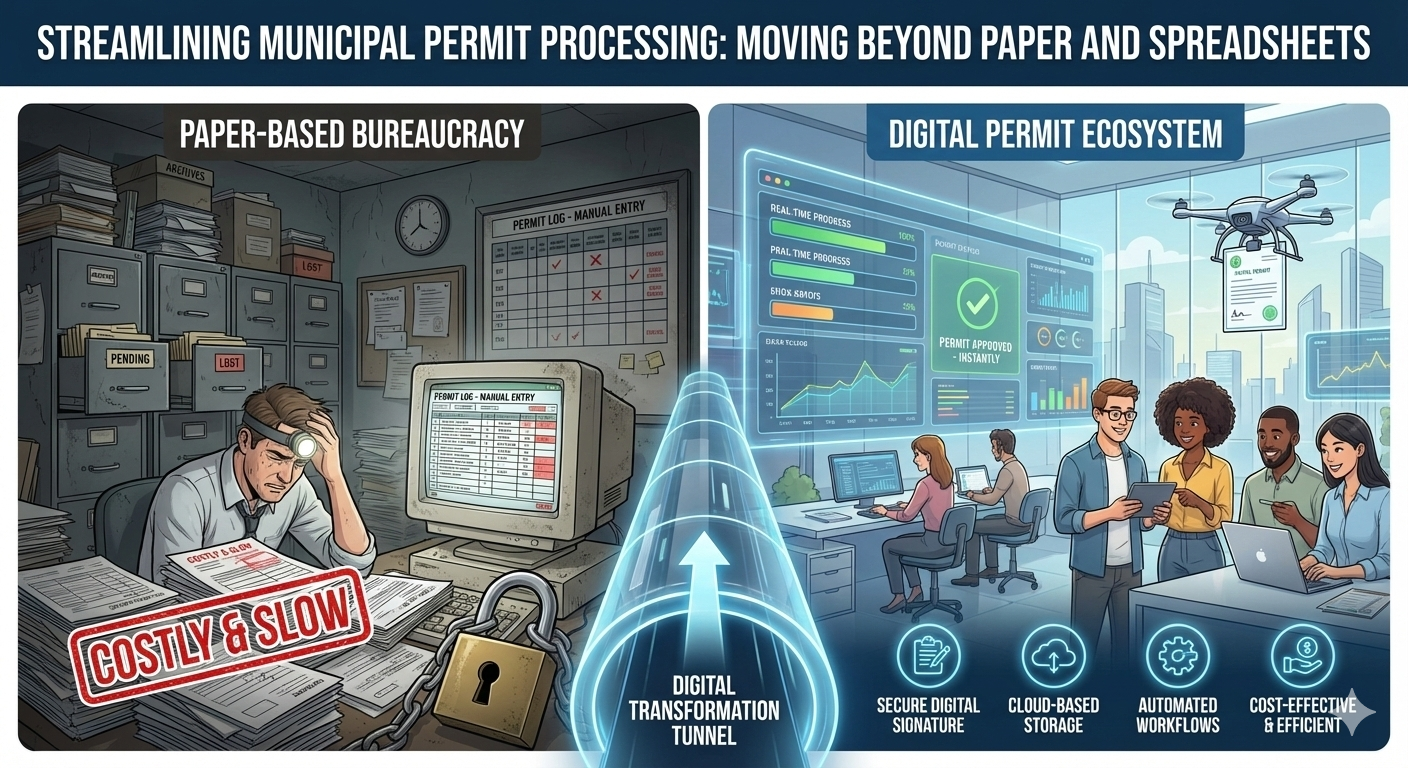
Streamlining Municipal Permit Processing: Moving Beyond Paper and Spreadsheets
Municipal building departments across Canada are facing unprecedented pressure. With increasing provincial housing targets and a growing need for infrastructure development, the traditional methods of managing permits are reaching their breaking point. Many smaller and mid-sized municipalities still rely on a combination of physical paper files, manual spreadsheets, and email chains to track the lifecycle of a permit.
While these methods were standard for decades, they are no longer sufficient to meet the expectations of residents, developers, or provincial oversight bodies.
Why the Current Approach Fails
The reliance on manual entry and physical documentation creates a fragmented workflow. When a permit application exists only as a paper stack or a row in a local spreadsheet, it becomes a "dark data" asset. Only the person currently holding the file or looking at the specific spreadsheet has a clear view of the status.
Spreadsheets are prone to version control issues. One staff member might update a local copy while another refers to an outdated version. This lack of a single source of truth leads to conflicting information, missed deadlines, and a high risk of administrative error.
Operational Consequences
The operational impact of manual permitting is felt most acutely in three areas:
- Staff Capacity: Planning and building officials spend a disproportionate amount of time on clerical tasks, such as answering phone calls about status updates or searching for physical files, rather than focusing on technical reviews and inspections.
- Timelines: Inefficient hand-offs between departments (such as Fire, Engineering, and Planning) add days or weeks to approval times.
- Visibility and Compliance: Without centralized digital tracking, it is difficult for CAOs and Directors to generate accurate reports on permit volumes, processing times, or revenue. This makes long-term resource planning nearly impossible.
What Modern Municipal Permitting Software Changes
Transitioning to a dedicated digital platform changes the fundamental mechanics of the building department. Instead of information being pushed from desk to desk, it exists in a centralized cloud environment accessible to all authorized stakeholders.
Modern software automates the repetitive aspects of the workflow. Fee calculations, automated notifications to applicants, and internal task routing happen instantly. This ensures that no application sits idle on a desk simply because an internal notification was missed.
Why This Matters Specifically in Canada
Canadian municipalities operate under unique regulatory frameworks and climate considerations. Whether it is adhering to the National Building Code or specific provincial variations like the Ontario Building Code, the software must support local compliance requirements.
Furthermore, Canadian residents increasingly expect the same level of digital service from their local government that they receive from banks or provincial agencies. Providing an online portal where a resident can apply, pay, and track their permit status reduces the administrative burden on front-desk staff and increases public trust in local governance.
Where PermiPro Fits In
PermiPro is designed specifically to address these municipal challenges without the complexity or high costs often associated with enterprise software. It provides a structured environment where building departments can manage the entire permit lifecycle from submission to final inspection.
The platform focuses on clarity and ease of use. By centralizing all communication and documentation, PermiPro ensures that every department involved in the approval process is working from the same data. This reduces the risk of missed steps and improves the overall speed of service delivery for the municipality.
Book a Demo
To see how PermiPro can help your municipality transition away from spreadsheets and paper, visit our website to learn more or schedule a demonstration with our team.